Thursday, July 30, 2015

The Eighth Edition of the Run to the Hills Memorial Rally


Two Hills, Alberta is a small north-eastern community of around 1,500 people.
There is a motel, gas station, grocery store, pharmacy and a number of restaurants and convenience stores. They have a hospital, an active fire department, an RCMP detachment and pretty much any other amenity you could ask for.


Two of those amenities are Geleta Park and the Ag Society fair grounds, the home of the Run to the Hills Memorial Rally.
Campers started showing up 6 days early for the rally as they wanted to stake their claim to the campsite they wanted, nestled in among the trees! When I arrived on Thursday night before the rally, I was amazed to see over 100 people already there, all anticipating the fun and memories they would be making.


Friday was brutal, high winds and rain, but true to form the die hards just kept rolling in and over 200 people bellied up to the table for an incredible pig roast. Porky’s BBQ from Ashmont Alberta cooked those pigs to absolute perfection!

The beer gardens was filled with people enjoying the music from Black Crimson and The Marshall Lawrence Band and the beverages being served by a group of local ladies with wonderful senses of humour.
There was an unusual scavenger hunt that took place as well and those who took part had to do some crazy things like kissing Bob Ross’s arse! It was all a part of the stag and stag-ette for a couple who had met at the rally the year before.
Laughter and smiles filled the arena.

Scott Mackenzie
Saturday morning dawned with beautiful sunshine and the riders just kept coming in. The show ‘n’ shine was a marvel with lots of motorcycles and antique vehicles for people to ogle, but one motorcycle and rider stole the hearts and minds of every rider there. 10-year-old Scott Mackenzie and his Honda 50! This little man was the first one entered in the show ‘n’ shine and the pride he exhibited in that handed down motorcycle was palpable. He spent about 20 minutes cleaning and shining it up and then he talked to other riders about their motorcycles. Not one rider present wasn’t impressed with this young man as he rode his motorcycle out of the show ‘n’ shine taking away three trophies!
After the Show ‘n’ Shine, Pastor Wes took the pulpit and said a prayer over the riders and their machines that were going to be participating in the poker run. He also delivered the roll call of 17 names of riders who had fallen in the last year be it to motorcycle crashes or medical issues. Out of those 17 names, 4 of them were friends of mine.
Pastor Wes soberly reminded the riders as to why we were gathered for this rally, to build a monument to all riders who have lost their lives. So many riders have their ashes scattered to the wind and there is no marker of their lives other than the memories we carry in our hearts. The monument and fallen riders is why this rally is held and he wanted to ensure that fact was not lost in amongst the good times and laughs.
The poker run takes people throughout the county of Two Hills and the small businesses that support the poker run were appreciative of the 75 or so riders who participated.
When everyone returned to the grounds, the bike rodeo started and the fun began in earnest with riders and their passengers showing off their skills in competitions like the slow race, the keg push, honey I’m home, the pantyhose race and the burn out pit. The stands were filled with spectators and the howls of laughter and cheers of support were loud and raucous.


Casey Werney and Laurie Ellison
After the rodeo, Casey Werney and Laurie Ellison became man and wife in the first wedding to ever be held at the rally. What a hoot that was! Casey was delivered to the ceremony site via a hearse supplied by the Forsaken Souls RC and yes; he was in a coffin! Laurie was delivered to the ceremony site on the back of Shawn Hamel’s motorcycle. During the exchanging of rings, everyone noted the little balls and chains that were attached to the rings and that brought a lot of giggles from the crowd.


The maid of honour, Josee Milroy had cooked up a fabulous turkey dinner that cost $10 a plate with the proceeds being donated to the memorial.
When I found out how much money was still needed to be raised to get the memorial built, I offered to have my head shaved if we could raise the $10K needed to make a serious dent in the construction of the memorial and getting the park ready for visitors. I had told everyone the minimum I would shave my head for was $2,000. We were all slated to be on stage for 11 pm. At 7 pm, after that big turkey dinner, I went and laid down in the camper I was staying in, supplied by Robbie and Ian of the Dark Horse Café in Dewberry. I had had too much sun and was sick to my stomach. No one came and got me and so I missed seeing Ted from the Protection for the Unprotected get his head shaved for kids with cancer.
I had only raised just shy of $1,200 because of having to lie down. When I woke up to a quiet campground around 1 in the morning, I grabbed the bag of cash and beetled down to the arena with a pounding headache. The band on stage when I got there was that Wayne Allchin band, sadly I missed the Tom Hammered band.
I donated the cash I raised to the memorial but did not shave my head. I took some flack for that but at the end of the day, I had set a goal and did not meet it. I will be hosting an online fundraiser where I will shave my head and donate my hair once again to Locks of Love. The last time I shaved my head, 5 years ago at the Grande Prairie Toy Run I raised over $2,000 and donated enough hair to make three wigs for little girls. I intend to donate it again – but, the goal truly is to help see this memorial and the gardens get built and so after Bob Ross figures out how much more he needs to get the job done; that will be the goal I set. I personally have over 25 names I want to see on the memorial, friends who are no longer with us. I want a place where I can go and reflect on their lives, the memories and the meaning their loves brought to mine. I am determined to help Bob reach his goal.
It will be filmed for airing on YouTube so that people will be able to see that the hair really did go!
Sunday was a day of mixed emotions. Unlike previous years where people packed up and were gone from the campsite by 10 am, this year many campers stayed until well into the afternoon, no one wanted to have to say goodbye.
I stayed on in Two Hills as Bob and I had meeting with Community Futures and a few other stakeholders in the region that also want to do what they can to see the memorial become a reality. You see the first 5 years of the rally, Bob lost money; money he had to put in from his own pocket to ensure all of the bills got paid. It took 4 years to negotiate the lease for the Wayside Park on the edge of town. It’s been a long road.
In the last two years, new roofs were put on the outhouses and the old cook shack that is being converted into a chapel and the buildings have gotten a coat of paint.
Bob has amassed a ton of sidewalk paving bricks, the concrete culvert that will serve as the base of the monument, the arch for the gate and a number of other items that will be used like folding chairs and tables, but there is a ton of work to do to the grounds.
Bob wants the landscaping done, flowers and trees planted, a deck on the chapel where people will be able to host BBQ’s and meals to support memorial services and then of course there is all of the brickwork for walk ways and the paving of the driveway to be done.
The last big ticket item is the metal sculpture for the top of the monument that needs to be done and the bronze plaque to commemorate the park.
I was so proud of the people who attended the rally – they left their campsites immaculate and the only clean up that needed to be done was picking up garbage that the high winds from Friday had scattered along the fences and to have all of the equipment put away and the concessions scrubbed down. I also helped Bob clean up at the arena. Did you guys and dolls realize this man is literally a committee of 1?


Did you realize that he has NO help to do the cleaning and putting away of equipment? Neither did I, so I am glad I was able to stay and help him over two days to get everything whipped back into shape.
This rally has become one of the best rallies in Alberta with close to 400 people attending a far cry from its humble start 8 years ago when 40 people came out.
It’s well run with events taking place on a reasonably tight schedule that ensures no one is bored!
It’s a true riders event, one that is pure in its intent and purpose: To see riders have a place of reflection!
The Run to the Hills Memorial Rally is a MUST attend event that gives back to the riding community, a community that is too often wrapped up in helping everyone else but themselves.
Plans are already well underway for the 9th Annual event and it is my hopes that the numbers swell to 800 or a thousand so that the memorial can become a reality and the riding community can celebrate the lives of those we have loved and lost.
Belt Drive Betty
Editor and Rider

Monday, July 27, 2015

Car maintenance considerations


car maintenance
Cars cost a lot of money. Even a used car is a major financial investment for most people. This is why it is so vitally important for you to take care of your car, if you are lucky enough to own one. While caring for your car will cost you some money initially, that is nothing compared to the massive amount of money that major repairs will cost you if you decide to neglect routine maintenance. Your car is essential for living your daily life. You need it to function properly. Otherwise, you will have problems going to work and other places. Here are some examples of how properly maintaining your car will save you money.


1. Change your oil

An oil change is one of the most basic and essential maintenance tasks that your car requires to stay in proper working order. You can get a Pennsylvania oil change from your local western PA Toyota dealer. If you are not able to change your own oil, you will need to pay to have this task done. The small price of an oil change is worth it to ensure that your engine is going to continue running smoothly. However, if you do not change your oil at the recommended intervals, you may eventually develop various problems with your engine that are quite expensive to have fixed. Do not put yourself in this situation. Keep track of how much mileage was on your car the last time you had the oil changed. This will allow you to know the right time to schedule your next oil change. There is no good excuse to ignore this important task.

2. Tires balanced and rotated

If you have ever needed to buy a new set of tires, you know how incredibly expensive they can be. This is why you need to do whatever you can to make your tires last as long as possible. In order to do this, you will need to have them balanced and rotated according to the manufacturer specifications. If you fail to do this, your tires will wear unevenly, resulting in them needing to be replaced.

3. Get a tune-up

Doctors recommend that people get a physical once every year. It is also a good idea to have a professional mechanic inspect your car, just to make sure everything is in working order. Being proactive can save you a bundle.

Saturday, July 25, 2015

Setting the Record Straight About Shaving my Head for the Run to the Hills Rally Fallen Rider Monument

Last weekend I attended the Run to the Hills Memorial Rally, a rally that my company, Belt Drive Betty Media has sponsored since day one.

When I found out that Bob was short on money to truly get things cranking for the Fallen Riders Memorial, I told him that I don't have much for money but I have a lot of hair so I would solicit donations and when we hit the target of $10,000 I would shave my head.

$10,000 was the goal I had set from the beginning, because if Bob is going to apply for grants, he needs some matching money.

Right from the beginning I said I would NOT shave my head AT the rally unless I raised a minimum of $2,000.

Saturday night, after being in the sun all day, I went to lay down for a while. I had asked to be woken up, but no one came to get me.  I woke up around 1 am to a very quiet campground, I had a pounding headache from getting too much sun but I grabbed the bag of money, just shy of $1,200 and beetled down to the beer gardens.

I donated the money to Bob on stage and told him, I didn't hit the mark, but that we'd continue working at raising the $10K that was needed, that this was not over.
You see, if I had shaved my head for so little, we'd have nothing to work with to hit our mark so....

Bob and I met with Community Futures and they have agreed to help him fill out the grant applications and include letters of endorsement for the monument and park.

Bob didn't have a Pay Pal account for the Rally, so I helped him get it set up and now we are ready to raise the other $8,800 that is needed for Bob to have the funds to apply for the matching grants that are available to see the monument get completed.

Today we officially launch our Run to the Hills Memorial Headshave Fundraiser to finish raising the money I had set out to raise for the memorial and park.

That's the goal, $8,800 - once that is reached, I will go to my hairdresser in Grande Prairie with video camera in hand and have her shave my head so that the hair can be donated to Locks of Love to make wigs for little girls with cancer.

If it takes us 2 weeks or 6 months, I don't care, I will shave my head when we reach the target.

Here is a video from Bob from the Run to the Hills Memorial Rally and myself that explains what the rally is all about and why the Memorial Monument and Park need the funds to be completed:


Donations to the memorial can be made directly to Bob Ross of the Run to the Hills Memorial Rally via Pay Pal: runtothehillsbikerally@yahoo.ca

When Bob tells me we have hit the mark, I will get my head shaved.

So come on folk, lets help him get this memorial built - our community needs and deserves this place of reflection.

Oh and don't forget that Bob needs volunteers to help do the work - the first work bee is slated for the weekend of September 19th - there will be pulled pork sandwiches, beverages and camping for all who can help out. We need carpenters, bricklayers, landscapers, and hands to help the trades people get the job done!

You can email Bob at runtothehillsrally@yahoo.ca to let him know how you can help!

Belt Drive Betty
Editor & Rider


Disclaimer:
All data and information provided on this site is for informational purposes only. The Belt Drive Betty Blog makes no representations as to accuracy, completeness, currentness, suitability, or validity of any information on this site & will not be liable for any errors, omissions, or delays in this information or any losses, injuries, or damages arising from its display or use. All information is provided on an as-is basis.


Monday, July 20, 2015

Motorcycling in Canada - A Ride Through Our History - Part 4

Motorcycling in Canada - A Ride Through Our History - Part 4


Manitoba's early history with the motorcycle is as interesting and fascinating as British Columbia, Alberta or Saskatchewan's. In fact, the Manitoba Motorcycle Club is recognized officially as Canada's oldest motorcycle club. They were founded in 1911. In 2010 they amalgamated with the Antique Motorcycle Club of Manitoba.


During the early 1900's Manitoba had a bustling motorcycle community.

Photo located on the Antique Motorcycle Club of Manitoba Web Site

The Manitoba Motorcycle Club, and the Winnipeg RoughRiders Motorcycle Club are amongst the best documented of all of the clubs in Manitoba at the time.

The Manitoba Motorcycle Club had some pretty talented racers.

In October of 1911, Joe Baribeau of the Manitoba Motorcycle Club set the world record for 100 miles on a dirt track at 1:40:14 & 3/5 second. He shaved almost 2 minutes off the previous record! Not only that he set the pace at and average speed of 60 mph.

Joe was only a part of the Manitoba Motorcycle Club for two years, but his numerous victories and his huge love of the sport made a huge impact in those two short years.

Scranton Truth, Oct. 16, 1911

Baribeau went on the be a principle racer for the Hendee Manufacturing Co. (Indian).
His racing career only lasted until 1913 when he wrecked in Toledo Ohio. He only ever raced once after that, in Toronto in 1915.

There is one more first that goes to Joe Baribeau - his is the first recorded motorcycle wedding in Canada.

Winnipeg Tribune,  Nov. 5, 1913

The clubs of the day in Manitoba were very active. There were lots of hill races, TT races, dirt track races, socials and more. The motorcycle community of Manitoba was also very civic minded.

The Manitoba Motorcycle Club and the Winnipeg RoughRiders Motorcycle Club collectively offered up 100 motorcycles and the manpower to form a motorcycle unit for the war in 1940.


Winnipeg Tribune, July 19, 1940
Winnipeg Tribune 1940


Many Manitoba riders played roles in the way the motorcycle was used to impact our history and culture.

By the end of 1910, there were approximately 10 dealerships in and around Winnipeg and all were looking to fill the demand for the motorcycle.

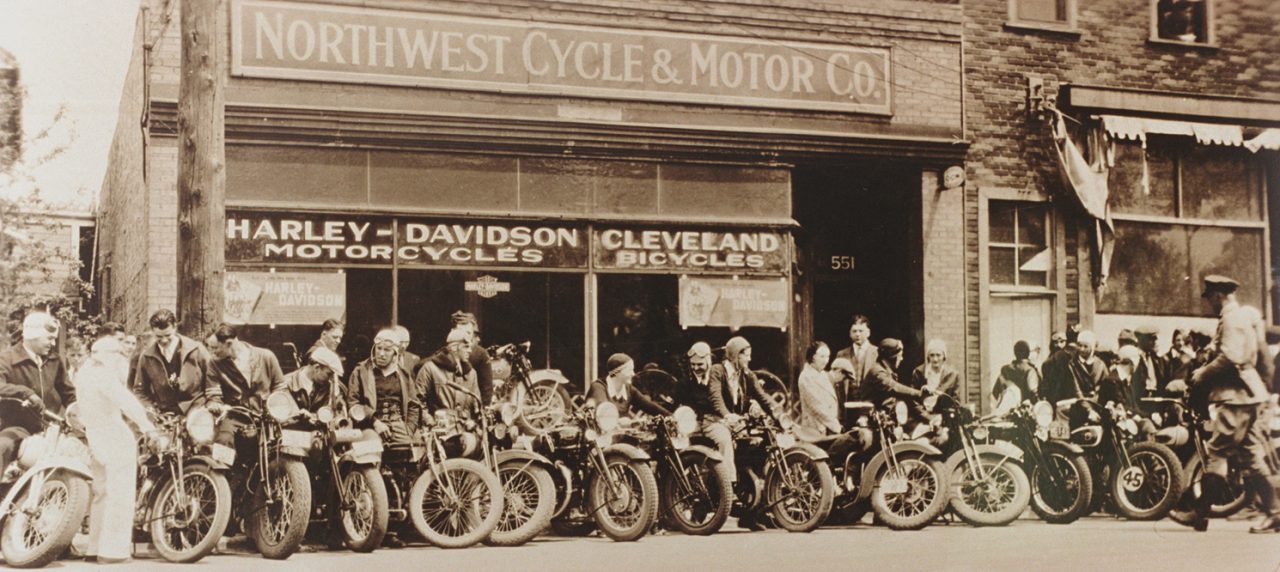
One of the best documented was the Northwest Cycle & Motor company. 

Opened in 1912, over the course of their history they would sell everything from Harley-Davidson, Ducati, Lambretta and everything in between. In 1978 the dealership was bought by Harley-Davidson of Winnipeg.

Back in the day, the Northwest Cycle & Motor Company was not just a place for riders to congregate or drool over new machines. It was also a place for innovation.

In 1948 a gent by the name of Ben Benson worked at this motorcycle shop and he filed and received the patent for the Hydra Glide front end!

See his Patent here.

It is believed that he struck a deal with the Harley-Davidson Motor Corp. in late 1948 before his patent was approved in 1950.


Meet another interesting Manitoba rider; Albert E Bennett (1906-1968)

First Row, second from the left


Born in Rossburn Manitoba, he and his family moved to Winnipeg in 1909.

After a stint prospecting for gold in the Williams Lake BC region, he returned to Winnipeg where he held the position of superintendent for the Winnipeg Electric Company of 14 years.

He had also worked as an assistant engineer during the construction of the Norwood Bridge and held the position of executive director for Met-Wood Industries. Heavily involved with civic politics he served on city council for 5 years from 1955 to 1960.

Mr. Bennett is probably best known in our history books as the founder of the first air cadet corps in Canada (1938) and for his role in the second world war as the commanding officer of Winnipeg's motorcycle training unit.

I hope you enjoyed our ride through early motorcycle history in Manitoba....So far this ride through our history has had some colourful and talented characters involved!

Ontario is up next!

Here are a couple of videos from the Antique Motorcycle Club of Manitoba's YouTube Channel that I thought you might enjoy:


Interesting Historical tidbits:

1906: Quebec, it is believed that there were 3 motorcycles registered in the province 

1911: Ontario issues motorcycle license plates

1911: New Brunswick includes motorcycle plates as part of their first run of licence plates

1912: Manitoba issues motorcycle plates that are miniature in size and revert to large plates with no provincial emblems for motorcycles in 1914.

1912: The Titanic sinks off the coast of Newfoundland

1912: Saskatchewan issues miniature motorcycle plates with provincial crests

1913: British Columbia introduces motorcycle license plates that are miniature in size, in 1914 the
plate changed to the size of a regular plate but had additional mounting holes.

1914: Britain declares war on Germany, Canada as a colony is at war.

1914: Winnipeg MB, the Fort Garry Horse was founded and was Manitoba's only cavalry regiment

1929: Canada is the second largest manufacture of automobiles. By the end of 1929 there were 1.9 million registered automobiles in Canada.

1930: The average cost of a car was $600

1939: Prince Edward Island - this is the earliest known motorcycle plate for PEI

1938 - 1945: Canada stops producing civilian products such as cars, appliances and clothing, and focuses on military production.

I hope you enjoyed our ride through early motorcycle history in Manitoba....
Ontario is up next!

I hope you will help us find Canada's MOST rider Friendly Community

Visit www.riderfriendlycontest.ca


If you are blessed enough to be riding today, please remember to ride like everyone around you is blind and cannot see you.

Belt Drive Betty,
Editor & Rider


Research for this article:

Canadian Motorcycle Hall of Fame
Greg Williams
Winnipeg Free Press
Manitoba Motorcycle Club Archives
Antique Motorcycle Club of Manitoba
Canadian Car
Memorable Manitobans
Google: Patents
Eric's Plates
Winnipeg 100 Years
Winnipeg.ca
Winnipeg Tribune
Scranton Truth


Disclaimer:
All data and information provided on this site is for informational purposes only. The Belt Drive Betty Blog makes no representations as to accuracy, completeness, currentness, suitability, or validity of any information on this site & will not be liable for any errors, omissions, or delays in this information or any losses, injuries, or damages arising from its display or use. All information is provided on an as-is basis.

Monday, July 13, 2015

Motorcycling in Canada - A Ride Through Our History - Part 3

Motorcycling in Canada - A Ride Through Our History - Part 3

The dirty thirties were harder in rural Western Canada than anywhere else in the world, but out of the dust bowl of the prairies sprung up one of western Canada's most influential businesses and riders.

Nicholson Brothers Motorcycles was opened in Saskatoon Saskatchewan in 1933 by two brothers, Lawrence and J.B (Bernie) Nicholson.

While their dealership and mail order business was important to the growth of motorcycling in western Canada, J.B. (Bernie) Nicholson himself, is a man who influenced the motorcycle industry in a mighty way.

Photo located:
thevintagent.blogspot.ca
The Nicholson Brothers started out importing the Douglas and Calthorpe motorcycles and by 1935 had evolved their business into a mail order parts house replete with extensive catalogues of parts that were updated yearly and included information on all of the improvements each manufacturer had made to their motorcycle offerings.

Over the years they imported and sold motorcycles and parts for these brands (and others): 
Calthorpe, Douglas,  Raleigh, Rudge,  Scott, Panther, Super Excelsior, A.J.S., Ariel, Matchless, Norton, Royal Enfield, Panther, Sunbeam, Triumph, Villiers and Indian.

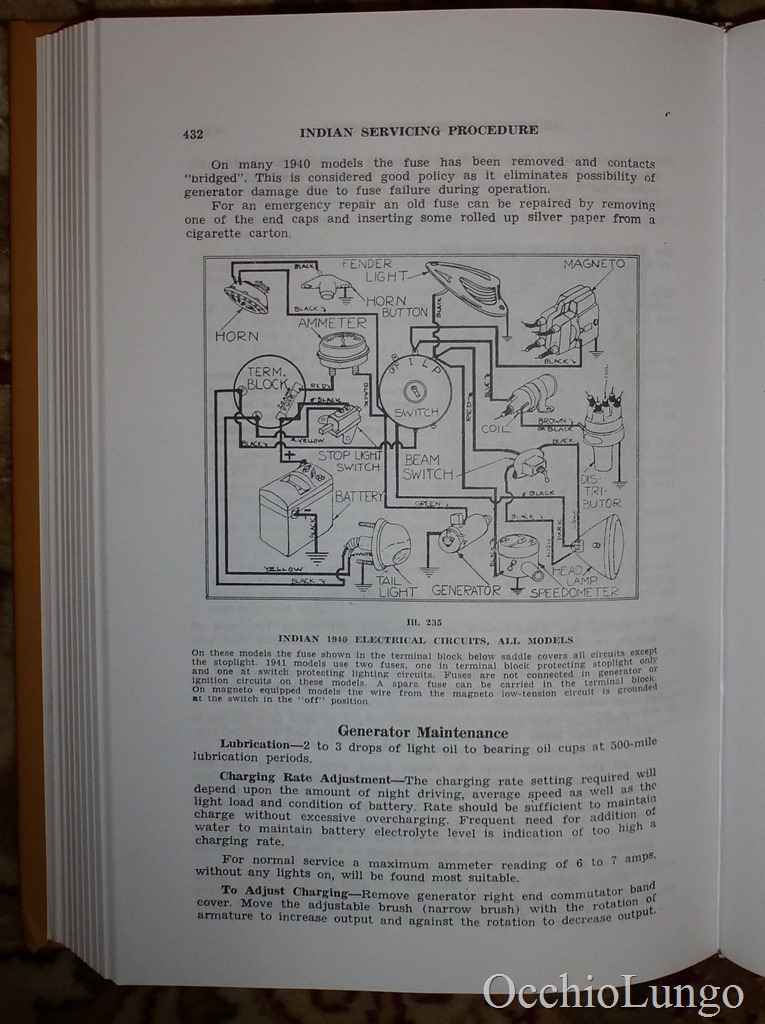
At the age of 25, Bernie constructed the first ever repair manual that offered diagrams and information on repairing and maintaining the motorcycles that he had worked on.

He had already been contributing technical articles to Motor Cycling magazine, but was inspired by the compliment paid to him by Graham Walker, the editor of Motor Cycling over the aide he had given writing and reworking an Indian manual.


According to the article written by Greg Williams:
"In a letter from Graham to Bernie dated October 31, 1941, Graham writes, “It is difficult to express in words just how much I appreciate the trouble you have gone to. You possess the happy knack of describing the necessary work in such a concise manner and in such a logical sequence as to make it understandable to even inexperienced fitters, and yet, at the same time, suitable for the first-class mechanic."

In the 1930's and 40's, most motorcycles did not come with repair manuals.


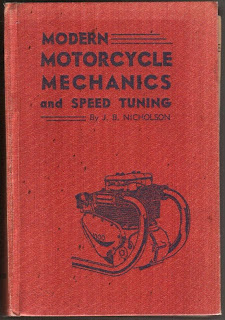
Photo located: occhiolungo.wordpress.com/
Published in 1942, the first edition of "Modern Motorcycle Mechanics and Speed Tuning" sold 4,000 copies. In all Bernie produced 7 manuals. The 7the edition of Modern Motorcycle Mechanics included information on almost every Japanese, British and American motorcycle that had been built to date. He covered the topics of motorcycle design, operation and maintenance and included chapters on specific brands. The 763 page hardcover book sold over 10,000 copies.

Because of the contribution of these repair manuals, motorcycling was able to grow in regions where mechanics/fitters were few and far between.

Many a motorcycle was kept on the road because of "Modern Motorcycle Mechanic" and today, the same is true.  His manuals are the bible for antique and vintage motorcycle repair.


Nicholson Brothers Motorcycles also employed interesting marketing tactics in their parts and sales catalogues. They give one an idea of the growth of motorcycling as seen through the retail window of one motorsport dealer.


Photo located at: www.gregwilliams.ca

In 1939, they had a map of Western Canada on the back of their catalogue and it had listed the places they had sold motorcycles to.

Blue Sky, Grande Prairie, Sexsmith and Rochester Alberta were among the places listed on the map.

The caption on the bottom of the map:

 The popularity of motorcycles is increasing in all parts of Canada and it is interesting to note that the sales of machines in outlying districts where roads are almost non-existent have been growing steadily. As well as the great sporting attractions of motorcycling, the exceptional low cost transportation and the ability to travel to points inaccessible to cars are amongst the advantages a motorcycle offers."

You see, even in its earliest of days, motorcycles, like their predecessor the bicycle, changed lives by giving people a new found sense of freedom and self reliance.

Today, Greg Williams nurtures and cares for the Modern Motorcycle Mechanics publishing.
Greg has also written a book on the history of the man behind the books called "Prairie Dust, Motorcycles and a Typewriter"

Interesting Historical Tidbits:

1910: Sturgess Cycle opens in Hamilton Ontario. They are considered to be Canada's OLDEST motorsports dealer and the OLDEST Honda dealership.

1911: Schulte's easy-start "Free-engine" model with multi-plate clutch in rear hub is available (patented by Schulte in 1908, this is Triumph's first bike with a clutch). This meant riders no longer had to run along side the bike to get it started, & then jump on! They could just ride away from a stationary position.

1911: The Manitoba Motorcycle Club is founded. Today the Canadian Hall of fame says it is the oldest MC Club in Canada and that is reported to be the 4th oldest in the world.

1927: Stanley Glanfield, took a 3.5 hp single cylinder Rudge-Whitworth on an 18,000 mile journey around the world, covering four continents.

Photo located: thevintagent.blogspot.ca
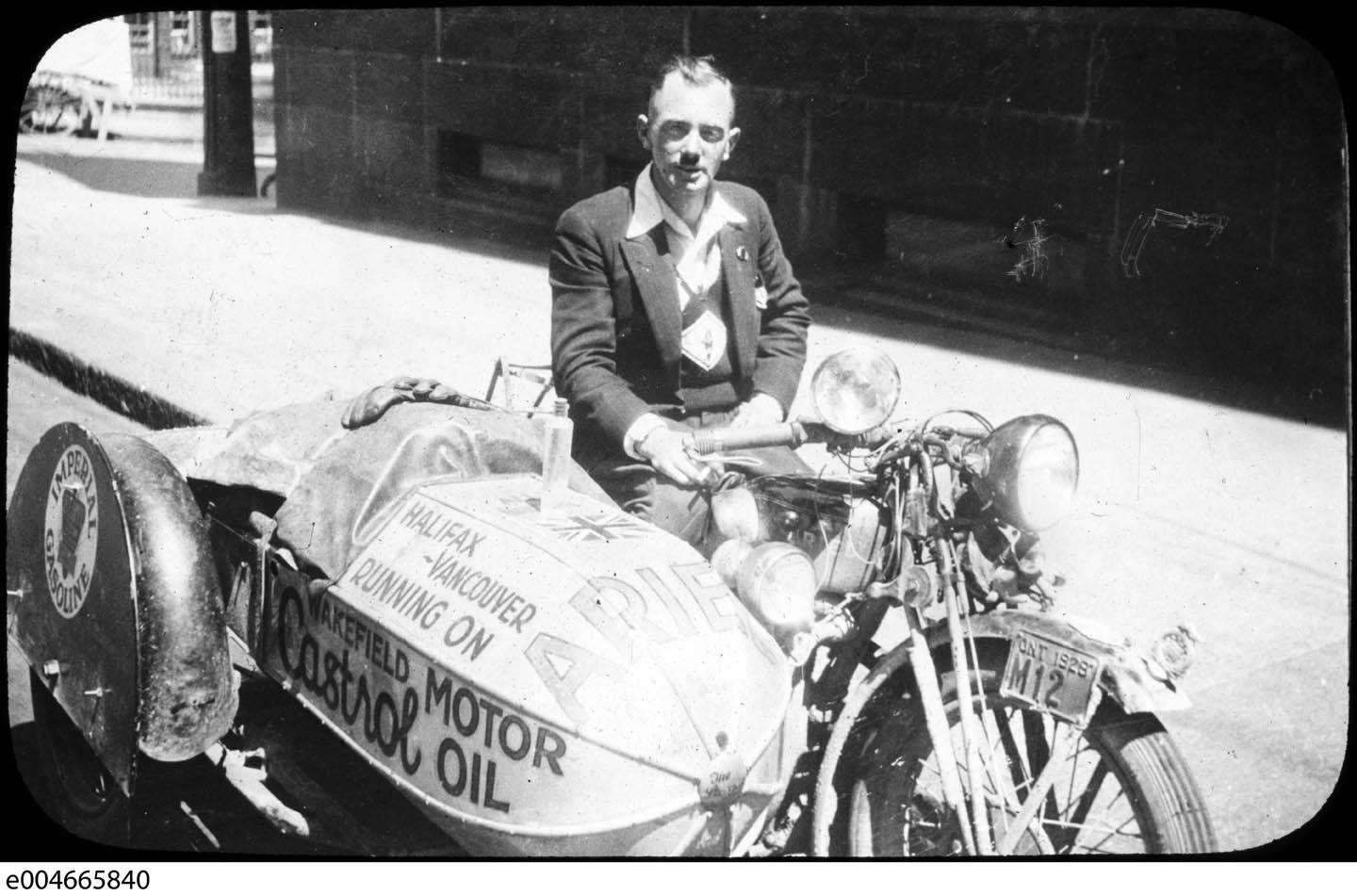
1928: Graham Oates becomes the first person to traverse the breadth of Canada on a gas propelled rubber tired vehicle. The trip took him 21 days. Sponsored by Ariel Motors and Castrol Oil, Graham rode from Nova Scotia to Vancouver on a new 497cc ‘Two Port’ single-cylinder Ariel motorcycle attached to a Canadian-built sidecar – constructed by Sturgess of Hamilton, Ont.

1931-36: The Communist Party of Canada was virtually outlawed when nine of its leaders were arrested and convicted under the Criminal Code for being members of an "unlawful association"and was banned when war was declared in 1939.
 
1946:  Ducati produces its first bike, the 50cc Cucciolo.


I hope you enjoyed this instalment of "Motorcycling in Canada - a ride through our history"

Next we'll meander into Manitoba to see what was happening there....

I hope you will join us in our quest to find Canada's MOST Rider Friendly Community!
Get your nomination for your favourite community ready! Visit www.riderfriendlycontest.ca to find out more!

If you are blessed enough to be riding today, please remember to ride like everyone around you is blind and cannot see you.

Belt Drive Betty
Editor & Rider


Research for this Article:
Greg Williams
The Vintagent
Occhiolungo
Ian Chadwick
Canadian Encyclopedia
Canadian Motorcycle Hall of Fame

Disclaimer:
All data and information provided on this site is for informational purposes only. The Belt Drive Betty Blog makes no representations as to accuracy, completeness, currentness, suitability, or validity of any information on this site & will not be liable for any errors, omissions, or delays in this information or any losses, injuries, or damages arising from its display or use. All information is provided on an as-is basis.


Monday, July 06, 2015

Motorcycling in Canada - A Ride Through Our History - Part 2

Motorcycling in Canada - A Ride Through Our History - Part 2

In the 1890's bicycles were the most affordable and popular form of transportation and bicycle clubs had sprung up all over. Many a bicycle club eventually evolved into motorcycle clubs.

The bicycle itself is largely responsible for the emancipation of women. Not only did women find a new found freedom with regards to transportation but there was a sense of self reliance that the bicycle offered. Because of the dress of the day; voluminous skirts and dresses, the bicycle is also somewhat responsible for the fashion revolution of bloomers - the precursor to women's pants.


A motorcycle was considered to be an appropriate and acceptable form of transportation for women. 


You see, it was expected that, because women had taken so avidly to riding bicycles, that they would naturally gravitate towards motorcycles. In fact, in the book "Harley-Davidson - A History of the World's Most Famous Motorcycle" by Margie Siegal, there is a passage wherein the author discusses women's dress and what measures manufacturers took to ensure that women's skirts did not get caught up in the motor or final drive.


It appears that it wasn't until after World War II, that riding a motorcycle somehow became frowned upon for women, at least in some circles.


Motorcyclists played key roles in World War I & II

The Canadian Signal Corps was using Indian Motorcycles in 1917.


A group of despatch riders of the Canadian Signal Corps on Hendee motorcycles (Indian Powerplus) , Camp Valcartier, Quebec, ca 1917.  (Library and Archives Canada Photo, MIKAN No. 3336987) 


Motorcycles were used not just for communications in the military, but also for transporting ammunition, medications and extracting the wounded and the dead from the battlefield  and taking them to medical facilities.


Many women rode "despatch" during both World Wars, albeit rarely on the front lines.


The British Wrens

Outside of the roles the motorcycle played in competitive sports and military use, this economical means of transportation became a transportation staple in many regions in Canada.

The motorcycle could take you where cars, early trucks and often horse and wagon couldn't. 
It could haul things and it sprouted all kinds of small empires.
It was affordable and had a very long range for fuel, which was important as filling stations were few and far between in rural Canada.


And back in the day, the fuel range could be made very long!

In fact, American racing legend, Smokin Joe Petrali was 14 years old in 1918 when he got 176 miles to a gallon of fuel by riding his bike at an idle and won the national economy class for 30.50-cubic-inch motorcycles in the US. 

His bike? A 1914 30.50-inch (500cc) Indian Standard that cost him $35.00

I discussed in my previous article, some of the contributions to motorcycling that the Deeley family brought to British Columbia and Canada in 1914 and on into modern times, but BC was not the only place in Canada where enterprising men were impacting the Canadian motorcycling scene.

Far from it. 

All across the country there were people who impacted our community, sport, industry and country.

Let's move on to Alberta in the early 1930's...where the motorcycle, anger and determination to do the right thing started an empire.

In 1931 a very angry young Walt Healy became the Indian dealer in Calgary Alberta.

Why was 18 year old Walt so angry?


Walt Healy: www.walthealy.com
Well you see this enterprising young man had started running a delivery service at 13 years of age. 

He started first with bicycles and once he earned enough money he purchased a 1914 Douglas for $15. 

That Douglas allowed him to earn money faster and soon he owned both a Harley and and Indian side car outfit. 

So the story goes, Walt had gone to then Harley-Davidson dealer Clyde Paul and put a deposit down on the next Harley Police bike to come in. 

When he went in to collect the motorcycle he was told by the dealer, that he had sold it to someone else.  Well, young Walt said, "I want the next police rig that comes in", and again the story repeated itself. This time Clyde, had decided he was going to make the rig into a hill climber instead of selling it to young Walt. To Walt's way of thinking, this was a poor way to do business.

Walt ended up buying a 101 Indian Scout engine from Clyde for the $20 he had on deposit, and then he bought an Indian from a friend for $10. He built that motorcycle to be a hill eating, Harley eating, Clyde's pride eating machine and made sure to enter every race that Clyde did.  

Reportedly Clyde never did beat Walt.

In the meantime, Walt had gone to the Indian Dealer to buy two bikes and ended up buying the Calgary Indian dealership for $100 thanks to a friend who co-signed the note.

Between his dealership and delivery service Walt managed to eek out a living, eventually hiring his dad to wrench on bikes. The hard work and long hours paid off. Over the years Walt Healy's not only became a dealership to be reckoned with but the man himself was a force to be reckoned with.  

He was behind the motorcycle mechanics trade being officially recognized by the Alberta government.

It took him 18 years and he saw four ministers of transport go through their terms as he sought to have motorcycle mechanics recognized as a licensed trade in Alberta. 

In 1986, he received his own motorcycle mechanics licence.

As a young man of 14, Walt had subsidize his income from the delivery service by allowing other young people to ride his motorcycle.  He'd charge them 5 cents, teach them the basics and let them ride his motorcycle up and down the block but if they turned the corner and went out of sight, he'd charge them 10 cents.  

We'll that desire to teach others to ride culminated in his ‘Learn to Ride’ program.

Eventually the program turned into the Calgary Safety Council, and that evolved into what is now known as the Canada Safety Council.

Walt Healy passed away in 2002 and sadly on March 31, 2014 Walt Healy Motorsports closed for good, closing a chapter on Alberta and Canadian motorcycling history.

Walt Healy's contributions to motorcycling are many and whether you have ever heard his name or not, his influence, determination, work ethic, persistence, passion and knowledge of the motorcycle forever changed the face of motorcycling in Canada.


Interesting historical tidbits:

1911: The Toronto Police Service, Canada's first police service was also the first police service to put motorcycles into use.

1920: British Columbia became the third province to start driving on the right hand side of the road.
Ontario and Quebec were the first provinces to adopt this practise. New Brunswick, Nova Scotia and PEI followed suit shortly thereafter.

1926: The Calgary Motorcycle Club was founded by Walt Healy in 1926, and still exists today.

1937:  The first intercity, divided highway in North America opens featuring the longest stretch of consistently illuminated road in the world at that time. The Queen Elizabeth Way, named after the Queen Mum, is 139.1 kilometres in length.

1940: The Red Devils MC is founded in Hamilton Ontario

1949: Parliament passes the Trans Canada Highway Act to build a highway that would connect all of Canada, the act ensured cost sharing between federal and provincial governments. Today the Trans Canada highway is 8,030 KM's long, construction started in 1950 and the highway officially opened in 1962 and was completed in 1971 making it one of the longest national highways in the world.

1949: The Motor Maids of the Eastern Canadian District was founded, in 2007 their district became known as the Atlantic Canada District.

1949: Olds Motorcycle Sales opened on a farm near Olds AB, today we know the dealership as Turple Brothers located in Red Deer.

I hope you enjoyed this little ride down memory lane!

There is more in store for you as next time we look at Saskatchewan and it's involvement in the early days of motorcycling.


I hope you will join us in our quest to find Canada's MOST Rider Friendly Community.
It is a truly a contest of exploration, discovery and community pride. 12 communities will share in over $60,000 in marketing! 


Visit www.riderfriendlycontest.ca to find out more and start thinking of the Canadian community that you think is worthy of the title, Canada's MOST Rider Friendly Community.

If you are blessed enough to be riding today, please remember to ride like everyone around you is blind and cannot see you!

Belt Drive Betty,
Editor & Rider


Research for this article:

Greg Williams:
(http://www.gregwilliams.ca/?page_id=75 & http://www.gregwilliams.ca/?page_id=193)
"Harley-Davidson - A History of the World's Most Famous Motorcycle" by Margie Siegal
Library and Archives Canada (http://www.bac-lac.gc.ca/eng/discover/military-heritage/Pages/military-heritage.aspx)
AMA Motorcycle Hall of Fame
In Search of the Canadian Car
Ontario Ministry of Transportation and Communications, Historical Committee
Bytes Daily


Disclaimer:
All data and information provided on this site is for informational purposes only. The Belt Drive Betty Blog makes no representations as to accuracy, completeness, currentness, suitability, or validity of any information on this site & will not be liable for any errors, omissions, or delays in this information or any losses, injuries, or damages arising from its display or use. All information is provided on an as-is basis.

Monday, June 29, 2015

Motorcycling in Canada - A Ride Through Our History - Special Feature

Lesbian, Gay, Bi-sexual & Transgender Month - Also known as Gay Pride Month is almost over.
So what does the LGBT community and it's celebrations have to do with motorcycling in Canada?

The recent publicity surrounding Bruce Jenner and his becoming Caitlyn has drawn much fire from society in North America as most people today just simply don't see what Bruce, now Caitlyn has done as news.

That is the acceptance factor of today. It's no big deal.

But imagine being a Grand Prix Motorcycle Racer and struggling with your identity in the 1950's.

Canada has had some rather famous people, who are transgender, come out of the closet so to speak.

Jamie Lee Hamilton - a Vancouver politician, aboriginal people's advocate and an advocate for sex trade workers. Born in 1955 as James Arthur Hamilton, her parents were both political activists.
In 1970 she was the first youth to be treated in Canada for gender identity disorder.

Jenna Talackova - born in 1988, raised in Vancouver, she began gender transition at 14 years of age. She completed he sex reassignment surgery at 19. She is best known for her role in the 2012 Miss Universe Canada Pageant when the Canadian pageant committee attempted to disqualify her. However, Donald Trump's office issued a statement reversing the Canadian organizers decision. She placed in the top 12 of the pageant.

Alec Butler - born in 1950 as Audrey Bulter, this Cape Breton native is an award winning playwright and filmmaker.

Aaron H. Devor - born in 1951 as Holly, Aaron is an internationally respected expert on gender, sex
and sexuality who teaches at the University of Victoria in BC.

Michael, now Michelle Duff
But did you know that before most of these people were born, before they declared that they were born in the wrong body and decided to do something about it, that a Canadian motorcyclist had also done the same thing?

In fact, this motorcyclist is one of the very first persons in Canada to have their gender reassigned.

The first Canadian person whose documentation is complete and verified was Dianna (Clifford) Boileau in 1969, her reassignment was completed in 1970.


Born Michael Alan Duff in 1939, the Toronto
native married twice and had two boys and a girl.
In 1984 Michael became Michelle and her gender reassignment was completed in 1987.

Michelle went on to become an author of young adult title books, is a children's writer and a photographer.

Michelle - Michael Duff had an incredible racing career, one that spanned 14 years from 1955 to 1969. Hers is a fascinating story, one filled with exotic motorcycles on exotic tracks surrounded by equally exotic people.

At 13 she caught the bug for riding by sneaking her brother's motorcycle out of the garage.

By 15 she was racing competitively.

In 1964 she won the Belgian Grand Prix becoming the first North American to win a World Championship Grand Prix and the first rider to lap the Spa race course at 120 MPH on a 250 Yamaha.


The following video from the National Film Board, Ride for Your Life, deals with the near fatal crash Michael had in Japan in 1965 and why he wanted to get back on the track.


In spite of the fear that Michelle had that she might not be accepted by race fans or competitors, Michelle has found acceptance from both fans and colleagues.

"Make Haste Slowly" is her autobiography.

She is a captivating writer and if you love motorcycles, her story is one you'll want to delve into deeper. If you'd like to read more on her story and the glory days of Grand Prix racing in Europe, visit the references below.

If you are blessed to be riding today, please remember to ride like everyone around you is blind and cannot see you.

Belt Drive Betty
Editor & Rider

Research for this article:
zagria.blogspot.ca - A Gender Variance Who's Who
Michelle-Duff.ca
TTWebsite.com - Michelle Duff - A career with a twist
National Film Board of Canada (http://www.nfb.ca/film/ride_for_your_life/)
IJMS (International Journal of Motorcycle Studies)


Disclaimer:
All data and information provided on this site is for informational purposes only. The Belt Drive Betty Blog makes no representations as to accuracy, completeness, currentness, suitability, or validity of any information on this site & will not be liable for any errors, omissions, or delays in this information or any losses, injuries, or damages arising from its display or use. All information is provided on an as-is basis.