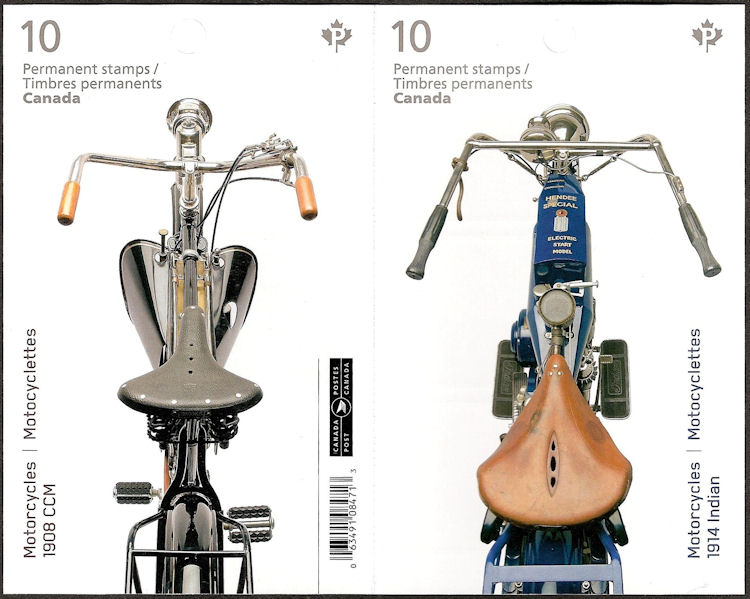
Motorcycling in Canada - A Ride Through Our History - Part 3
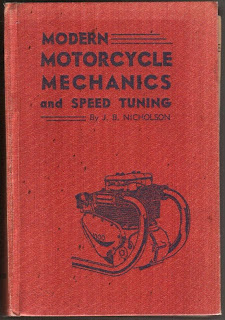
The dirty thirties were harder in rural Western Canada than anywhere else in the world, but out of the dust bowl of the prairies sprung up one of western Canada's most influential businesses and riders.Nicholson Brothers Motorcycles was opened in Saskatoon Saskatchewan in 1933 by two brothers, Lawrence and J.B (Bernie) Nicholson.
While their dealership and mail order business was important to the growth of motorcycling in western Canada, J.B. (Bernie) Nicholson himself, is a man who influenced the motorcycle industry in a mighty way.
 |
| Photo located: thevintagent.blogspot.ca |
Over the years they imported and sold motorcycles and parts for these brands (and others):
Calthorpe, Douglas, Raleigh, Rudge, Scott, Panther, Super Excelsior, A.J.S., Ariel, Matchless, Norton, Royal Enfield, Panther, Sunbeam, Triumph, Villiers and Indian.
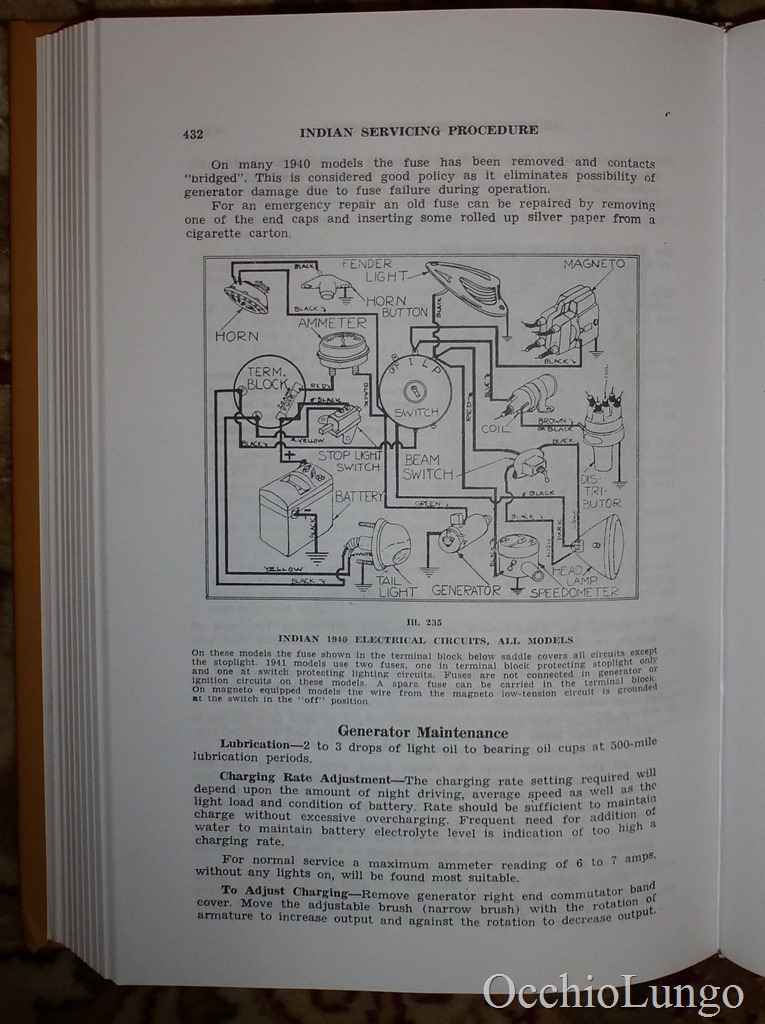
At the age of 25, Bernie constructed the first ever repair manual that offered diagrams and information on repairing and maintaining the motorcycles that he had worked on.
He had already been contributing technical articles to Motor Cycling magazine, but was inspired by the compliment paid to him by Graham Walker, the editor of Motor Cycling over the aide he had given writing and reworking an Indian manual.
According to the article written by Greg Williams:
"In a letter from Graham to Bernie dated October 31, 1941, Graham writes, “It is difficult to express in words just how much I appreciate the trouble you have gone to. You possess the happy knack of describing the necessary work in such a concise manner and in such a logical sequence as to make it understandable to even inexperienced fitters, and yet, at the same time, suitable for the first-class mechanic."
In the 1930's and 40's, most motorcycles did not come with repair manuals.
 |
| Photo located: occhiolungo.wordpress.com/ |
Because of the contribution of these repair manuals, motorcycling was able to grow in regions where mechanics/fitters were few and far between.
Many a motorcycle was kept on the road because of "Modern Motorcycle Mechanic" and today, the same is true. His manuals are the bible for antique and vintage motorcycle repair.
Nicholson Brothers Motorcycles also employed interesting marketing tactics in their parts and sales catalogues. They give one an idea of the growth of motorcycling as seen through the retail window of one motorsport dealer.
Many a motorcycle was kept on the road because of "Modern Motorcycle Mechanic" and today, the same is true. His manuals are the bible for antique and vintage motorcycle repair.
Nicholson Brothers Motorcycles also employed interesting marketing tactics in their parts and sales catalogues. They give one an idea of the growth of motorcycling as seen through the retail window of one motorsport dealer.
 |
| Photo located at: www.gregwilliams.ca |
In 1939, they had a map of Western Canada on the back of their catalogue and it had listed the places they had sold motorcycles to.
Blue Sky, Grande Prairie, Sexsmith and Rochester Alberta were among the places listed on the map.
The caption on the bottom of the map:
Blue Sky, Grande Prairie, Sexsmith and Rochester Alberta were among the places listed on the map.
The caption on the bottom of the map:
The popularity of motorcycles is increasing in all parts of Canada and it is interesting to note that the sales of machines in outlying districts where roads are almost non-existent have been growing steadily. As well as the great sporting attractions of motorcycling, the exceptional low cost transportation and the ability to travel to points inaccessible to cars are amongst the advantages a motorcycle offers."
You see, even in its earliest of days, motorcycles, like their predecessor the bicycle, changed lives by giving people a new found sense of freedom and self reliance.
Today, Greg Williams nurtures and cares for the Modern Motorcycle Mechanics publishing.
Greg has also written a book on the history of the man behind the books called "Prairie Dust, Motorcycles and a Typewriter"
You see, even in its earliest of days, motorcycles, like their predecessor the bicycle, changed lives by giving people a new found sense of freedom and self reliance.
Today, Greg Williams nurtures and cares for the Modern Motorcycle Mechanics publishing.
Greg has also written a book on the history of the man behind the books called "Prairie Dust, Motorcycles and a Typewriter"
Interesting Historical Tidbits:
1910: Sturgess Cycle opens in Hamilton Ontario. They are considered to be Canada's OLDEST motorsports dealer and the OLDEST Honda dealership.
1911: Schulte's easy-start "Free-engine" model with multi-plate clutch in rear hub is available (patented by Schulte in 1908, this is Triumph's first bike with a clutch). This meant riders no longer had to run along side the bike to get it started, & then jump on! They could just ride away from a stationary position.
1911: The Manitoba Motorcycle Club is founded. Today the Canadian Hall of fame says it is the oldest MC Club in Canada and that is reported to be the 4th oldest in the world.
1911: The Manitoba Motorcycle Club is founded. Today the Canadian Hall of fame says it is the oldest MC Club in Canada and that is reported to be the 4th oldest in the world.
1927: Stanley Glanfield, took a 3.5 hp single cylinder Rudge-Whitworth on an 18,000 mile journey around the world, covering four continents.
 |
| Photo located: thevintagent.blogspot.ca |
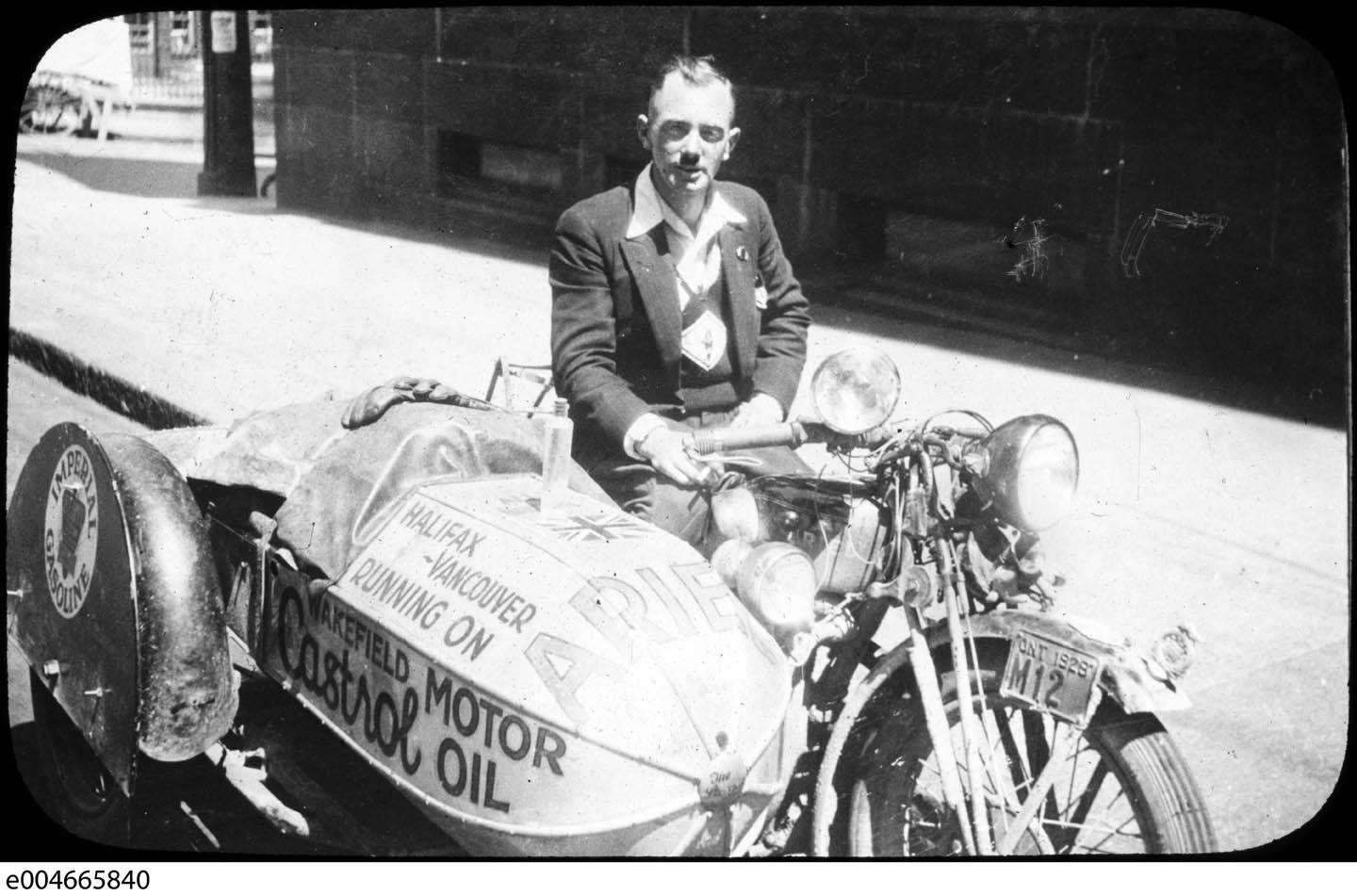
1928: Graham Oates becomes the first person to traverse the breadth of Canada on a gas propelled rubber tired vehicle. The trip took him 21 days. Sponsored by Ariel Motors and Castrol Oil, Graham rode from Nova Scotia to Vancouver on a new 497cc ‘Two Port’ single-cylinder Ariel motorcycle attached to a Canadian-built sidecar – constructed by Sturgess of Hamilton, Ont.
1946: Ducati produces its first bike, the 50cc Cucciolo.
I hope you enjoyed this instalment of "Motorcycling in Canada - a ride through our history"
Next we'll meander into Manitoba to see what was happening there....
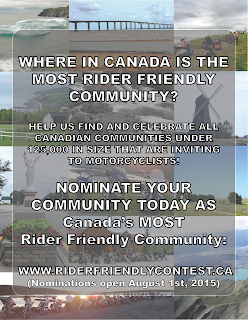 I hope you will join us in our quest to find Canada's MOST Rider Friendly Community!
Get your nomination for your favourite community ready! Visit www.riderfriendlycontest.ca to find out more!
If you are blessed enough to be riding today, please remember to ride like everyone around you is blind and cannot see you.
Belt Drive Betty
Editor & Rider
Next we'll meander into Manitoba to see what was happening there....

Get your nomination for your favourite community ready! Visit www.riderfriendlycontest.ca to find out more!
If you are blessed enough to be riding today, please remember to ride like everyone around you is blind and cannot see you.
Belt Drive Betty
Editor & Rider
Research for this Article:
Greg Williams
The Vintagent
Occhiolungo
Ian Chadwick
Canadian Encyclopedia
Canadian Motorcycle Hall of Fame
Disclaimer:
All data and information provided on this site is for informational purposes only. The Belt Drive Betty Blog makes no representations as to accuracy, completeness, currentness, suitability, or validity of any information on this site & will not be liable for any errors, omissions, or delays in this information or any losses, injuries, or damages arising from its display or use. All information is provided on an as-is basis.
Canadian Encyclopedia
Canadian Motorcycle Hall of Fame
Disclaimer:
All data and information provided on this site is for informational purposes only. The Belt Drive Betty Blog makes no representations as to accuracy, completeness, currentness, suitability, or validity of any information on this site & will not be liable for any errors, omissions, or delays in this information or any losses, injuries, or damages arising from its display or use. All information is provided on an as-is basis.